
When I started swimming again, my goal was two lengths of the pool. Twenty-five yards down, 25 yards back.
That’s it. Less than six minutes, and my workout was done.
Now I can swim 850 yards nonstop. But 50 yards was where I started.
In the past, I would set a big goal, get overwhelmed, and quit. I’d tell myself, “I can’t do this.”
I couldn’t do it yet. I needed to break the goal into work I could actually do, then give myself time to build from there.
1. I need a goal
My morning workout needs to be a piece of a bigger plan. I need to know why I’m getting out of bed.
I’ve shared my 2027 plan here. I’m also documenting my progress on social media. That’s one of my 50 by 50 goals—50 goals before I turn 50—and it creates accountability.
People know what I’m working toward.
A big goal can wear me down. Sometimes I feel like I’m not making progress, like I’m stuck in the mud. Then someone asks about it. They want an update. That gets me excited again.
But I’m big on small goals, too. Lifting 100 pounds. Losing five pounds. Walking around the block. Working out twice a week for four weeks.
Those two lengths of the pool gave me something I could finish. I didn’t need to swim 850 yards that day. I needed to swim 50.
2. I try to win the week
I used to look too far ahead. Now I try to win the week.
When I started my weight loss journey, I hired a coach because I had so many questions and concerns. Having someone help me work through them and give me a plan to follow was worth every penny.
For me, winning the week means doing the work I planned, looking honestly at how it went, and adjusting what needs to change.
My plan starts in a spreadsheet. I use TrainingDojo.com to move it into TrainingPeaks.com, where I manage my training.
Before I leave the house, I know what I’m doing. If I’m going to the gym, the workout is decided. If I’m swimming or running, that’s decided, too.
At the end of every week, I ask myself:
- Did I complete what I said I would complete?
- What went well?
- What needs to be adjusted?
After the first week of October, as I was getting closer to the Pumpkin Man Triathlon, I realized weightlifting was taking a bigger toll on me than I’d understood. I was carrying that fatigue into my swims, bike rides, and runs.
I was preparing for a triathlon, and my lifting was affecting that preparation. I scaled it back. It made a huge difference in those workouts.
I need a plan I can follow, and I need to pay attention to how it’s working.
I don’t have to be capable of the whole goal today. I have to do the work that prepares me for it.
I’m betting on myself, one week at a time.
3. I pack the night before
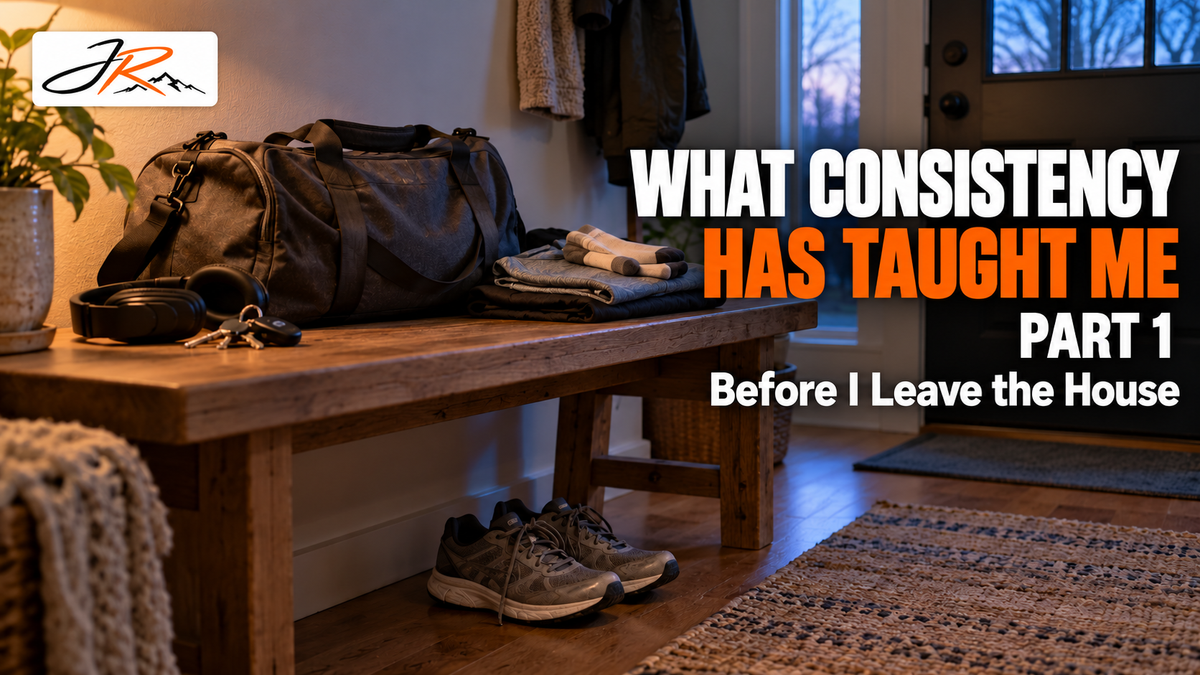
The night before, I set out my clothes in a nice little pile: shorts, shirt, socks, underwear, and shoes.
If I’m going to the gym, I mix my Bucked Up pre-workout, prepare my post-workout protein shake, and put them in the fridge. I pack my workout bag with my car keys, headphones, and whatever other gear I need.
My goal is to roll out of bed, walk to the bathroom, brush my teeth, wash my face, get dressed, grab my drinks and bag, and walk out the door.
No friction.
I’ve rolled over in the morning and thought, “I don’t want to work out at all.” Having everything ready helps me get moving anyway.
I don’t want to spend the morning looking for clothes or packing my bag. I take care of that the night before.
I’m a Bucked Up ambassador. My store link is here, and my discount code is justroper1. I may earn a commission on purchases made through my link or code.
4. I make room for sleep
I get tired. Sleep at 48 hits different than it did at 28.
As my workouts get more intense, I notice how much I need it. If I need eight hours of sleep, I have to make room for eight hours.
An early workout means thinking about bedtime. I can have the workout planned and every piece of gear ready, but staying up too late makes the morning harder.
I use an app called Rise to track my sleep debt. When it shows that I’m falling behind on sleep, I’ll cancel plans and stay in over the weekend to make more room for rest.
I’m asking a lot of my body. I need to give it time to recover, too.
Tomorrow morning, I still have to get out of bed. But the workout is planned, my clothes are waiting, and my bag is packed.
In Part 2, I’ll share what I’ve learned about the mornings when I still don’t feel like going—and the days when the workout needs to change.

Member discussion: